
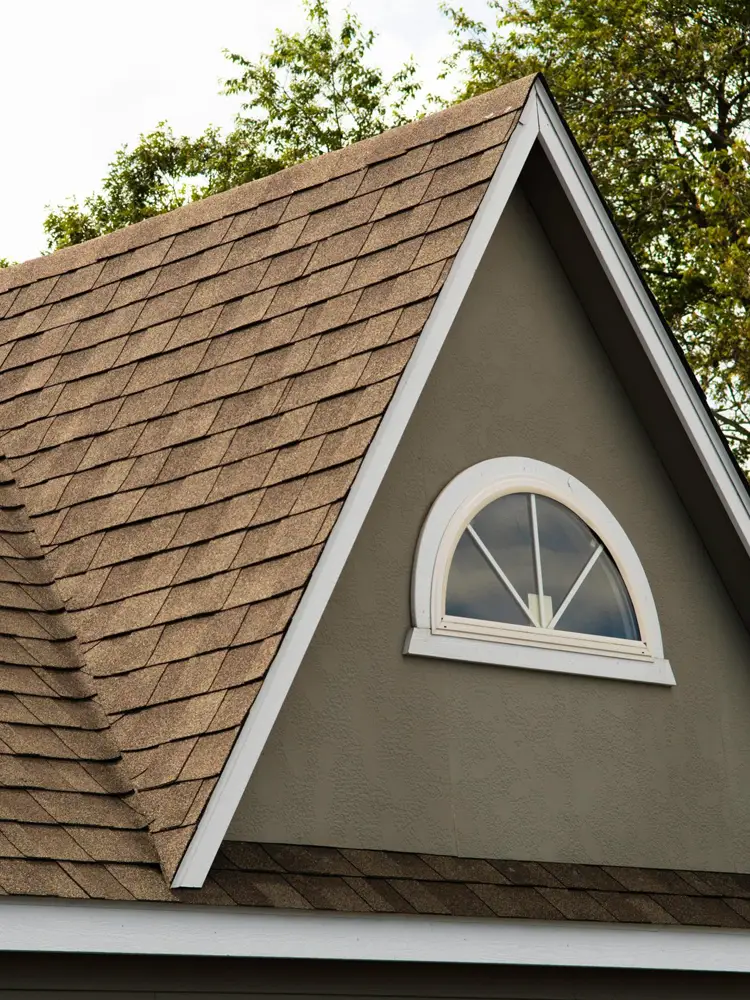

Emergency Roof Tarping Services

Emergency Roof Tarping Services - Shep's Roofing

A damaged roof does not stop leaking just because the storm has passed. Every hour an opening goes unprotected, water continues to saturate insulation, warp decking, stain ceilings, and create the conditions for mold growth that can cost thousands of dollars to remediate. Emergency roof tarping is the critical first response that stops this cascade of secondary damage and preserves the structural integrity of your home or business until permanent roof repairs can be completed.

Shep’s Roofing, headquartered at 435 N Main Street in Helper, UT, provides professional 24/7 emergency tarping services to homeowners and businesses across Carbon County and the greater Utah region. Whether a summer thunderstorm has ripped shingles from your residential roofing system or a heavy snow load has caused a partial collapse on a commercial building, our crews respond fast with the materials and expertise to secure your property. Call (435) 427-1552 any time, day or night.

Why Emergency Tarping Is Essential After Storm Damage in Utah

Utah’s geography creates weather patterns that are uniquely punishing for roofing systems. The National Weather Service Salt Lake City office routinely issues severe thunderstorm warnings for eastern Utah during the monsoon season, and Carbon County is no stranger to destructive events. In August 2024, Helper was hit by a hailstorm that produced golf-ball-sized hailstones, flooded residential streets, and caused widespread property damage across the city. Events like these leave roofs with punctures, missing shingles, and exposed decking that demand immediate attention.

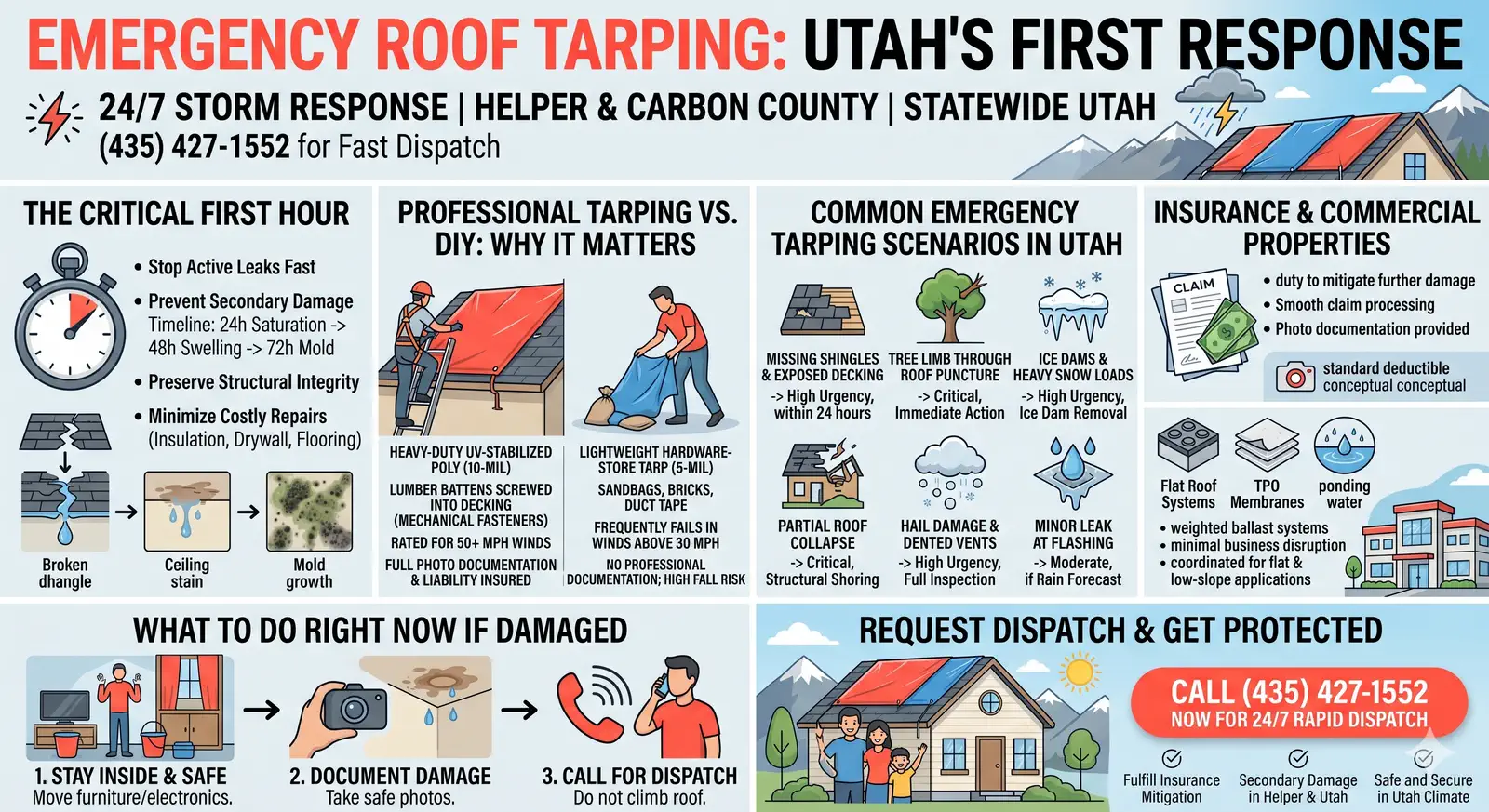
Without professional tarping, even a small breach can lead to problems that far exceed the original storm damage. Rainwater or snowmelt entering through a six-inch gap in your roofline can travel along rafters and sheathing, appearing as ceiling stains in rooms far from the actual entry point. Within 24 to 48 hours, saturated wood framing begins to swell and weaken. Within 72 hours, mold colonies can begin forming in warm, damp attic spaces. Emergency tarping stops this timeline in its tracks, buying you the days or weeks needed to complete a thorough roof inspection, file your insurance claim, and schedule permanent restoration.

How Our Professional Emergency Tarping Process Works in Utah

When you call Shep’s Roofing for emergency tarping, we follow a methodical process designed to maximize protection and create thorough documentation for your insurance claim. Here is what to expect from the moment you pick up the phone.

Step 1: Emergency Intake and Dispatch

Our team gathers basic information about the damage, your property location, and any safety hazards such as downed power lines or structural instability. We dispatch the nearest available crew, typically arriving within hours for properties in Helper, Price, and surrounding Carbon County communities.

Step 2: Safety Assessment and Damage Survey

Before anyone sets foot on the roof, we evaluate the structure from the ground. If there are signs of structural sagging or compromised trusses, we take additional precautions. We photograph all visible damage from multiple angles to begin building your insurance documentation.

Step 3: Debris Removal

Fallen tree limbs, broken shingles, displaced flashing, and other storm debris must be carefully cleared before a tarp can be positioned. Our crews remove debris without causing further damage to the surrounding roofing material.

Step 4: Tarp Measurement and Positioning

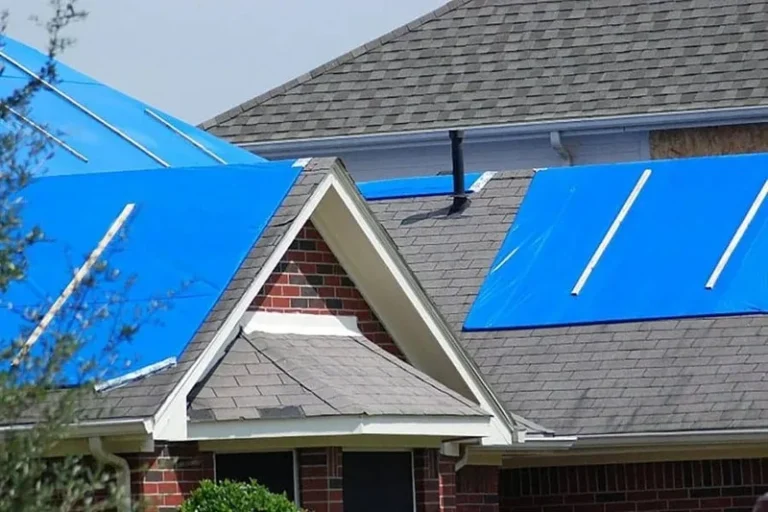
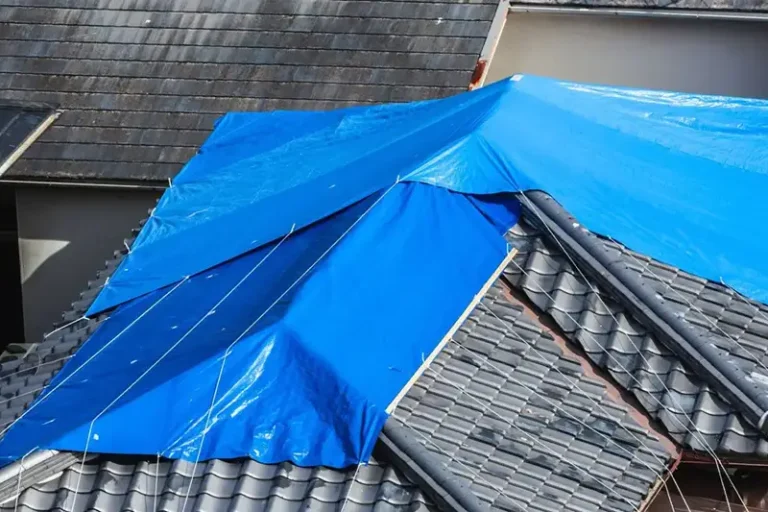
We measure the damaged area and select a heavy-duty, UV-stabilized polyethylene tarp that extends at least four feet beyond the damage on all sides. This generous overlap ensures water cannot be driven under the tarp by wind. The tarp is positioned over the ridge line whenever possible so gravity works in your favor.

Step 5: Mechanical Fastening

Unlike homeowner-applied tarps that rely on sandbags or duct tape, our installation uses 2×4 lumber battens screwed into the roof decking through the tarp material. This mechanical anchoring method withstands sustained winds of 50 mph or more and prevents the flapping and lifting that allows water infiltration. In Helper and eastern Utah, where canyon-funneled winds are common, this step is especially critical.

Step 6: Final Inspection and Documentation

We inspect every edge and seam of the tarp installation, then photograph the completed work. You receive a written summary of the tarping scope, material specifications, and photo documentation that your insurance adjuster will need when processing your storm damage claim.

Professional Tarping vs. DIY: Why It Matters

After a storm, the temptation to climb up and throw a blue tarp over the damage yourself is understandable. But there are serious safety and financial risks to a DIY approach. A rain-slicked or debris-covered roof is one of the most dangerous surfaces a homeowner can encounter, and a poorly secured tarp can actually void portions of your insurance claim by suggesting the damage was not severe enough to require professional intervention.

The table below compares professional tarping from Shep’s Roofing with typical DIY attempts so you can understand why the investment in expert installation pays for itself.

Factor

Professional Tarping (Shep’s Roofing)

DIY Tarping

Tarp Material

Heavy-duty UV-stabilized poly (10-mil or thicker)

Lightweight hardware-store tarp (typically 5-mil)

Fastening Method

2×4 lumber battens mechanically screwed into decking

Sandbags, bricks, or duct tape

Wind Resistance

Rated to withstand 50+ mph sustained winds

Frequently fails in winds above 25–30 mph

Safety

Trained crew with fall protection equipment

High risk of falls on wet or damaged surfaces

Insurance Documentation

Full photo report with scope of work provided

No professional documentation; may weaken claim

Lifespan

90+ days in typical Utah conditions

Often fails within days or after next weather event

Liability

Fully insured; covered if further damage occurs during install

Homeowner assumes all risk

Emergency Tarping for Commercial Properties in Utah

Commercial buildings in Utah face unique tarping challenges due to their size, roof type, and the business disruption that accompanies storm damage. Flat roof systems, TPO membranes, and commercial coatings each require different tarping techniques. A tarp that works on a steep-slope residential roof may not properly protect a low-slope commercial system where ponding water is the primary concern.

Shep’s Roofing’s commercial roofing crews carry oversized commercial-grade tarps and weighted ballast systems designed specifically for flat and low-slope applications. We coordinate directly with property managers and business owners to minimize operational disruption, and we understand the urgency of protecting inventory, equipment, and tenant spaces that are exposed to the elements.

Why Choose Shep’s Roofing

  • 24/7 Rapid Response: We prioritize emergency calls to get your roof covered and stop active water intrusion immediately, minimizing costly secondary damage to your drywall, insulation, and belongings.
  • Professional-Grade Materials: We never use flimsy hardware-store plastic. Our crews install heavy-duty, UV-resistant tarps secured with proper mechanical fasteners and wood furring strips to ensure the cover withstands intense canyon winds and heavy rain.
  • Insurance Claim Compliance: Most homeowners insurance policies require you to mitigate further damage after a storm. We provide the necessary photo documentation and itemized invoices to ensure your emergency tarping costs are smoothly processed with your claim.
  • Safety First: Climbing a damaged, wet, or structurally compromised roof is incredibly dangerous. Our licensed and fully insured technicians have the specialized safety equipment and training to secure your property without risking injury.
  • Seamless Transition to Permanent Repairs: We are not just a temporary patch crew. Once your home is secure, our team provides a comprehensive damage assessment and works directly with your insurance adjuster to seamlessly transition into permanent repairs or a full roof restoration.

When Emergency Tarping Is Needed: Common Scenarios in Utah

Not every storm event requires emergency tarping, but many do. Understanding when to call for immediate protection can save you thousands of dollars in avoidable secondary damage.

Emergency tarping is recommended after any hailstorm producing stones one inch or larger in diameter, particularly when you notice granule debris in gutters or visible dents on flashing and vents. It is also critical after wind damage events that have lifted, removed, or broken shingles, exposing the underlayment or bare decking beneath. In winter, heavy snow loads that cause partial collapse or ice dams that force water under the roofline are both scenarios that demand immediate tarping.

Fallen trees and large branches create some of the most urgent tarping situations. A tree limb punching through the roof deck creates an opening that can allow dozens of gallons of water to enter during a single rainstorm. In these cases, emergency tarping should be followed by an assessment for potential roof replacement once the property is stabilized.

The following table outlines common emergency tarping scenarios Utah homeowners encounter, along with the typical urgency level and recommended next steps.

Scenario

Urgency Level

Immediate Action

Recommended Follow-Up

Missing shingles after windstorm

High

Emergency tarping within 24 hours

Schedule wind damage inspection

Hail damage with exposed decking

High

Emergency tarping same day

File insurance claim; schedule full inspection

Tree limb through roof

Critical

Emergency tarping immediately

Structural engineering assessment; roof replacement evaluation

Ice dam causing interior leaks

High

Tarping plus ice dam removal

Ventilation and insulation improvements

Partial roof collapse from snow load

Critical

Emergency tarping and structural shoring

Structural repair and full roof replacement

Minor leak at flashing or pipe boot

Moderate

Tarping if rain is forecasted

Targeted leak repair

Insurance and Emergency Tarping: What Utah Homeowners Should Know

Most standard homeowners insurance policies in Utah cover emergency tarping as a necessary step to mitigate further damage after a covered event. In fact, your policy likely requires you to take reasonable steps to prevent additional damage, and failing to tarp an open roof could result in denied claims for secondary water damage. The Utah Insurance Department advises policyholders to document all damage and mitigation steps carefully.

Shep’s Roofing handles emergency tarping as part of our comprehensive storm damage roofing services. We document every step of the tarping process with timestamped photos and a written scope of work that your insurance adjuster can review. In most cases, the cost of professional tarping is included in your overall storm damage claim, meaning you pay nothing beyond your standard deductible.

Testimonials

What They’re Saying About Us

***REVIEWS GO HERE***

What to Do Right Now If Your Roof Is Damaged in Utah

If a storm has damaged your roof and you are reading this page looking for guidance, here is what you should do immediately. Stay inside and away from rooms where water is actively entering. Place buckets or containers under active leaks and move furniture, electronics, and valuables away from the affected area. Take photos of the damage from safe vantage points, including interior ceiling stains and any visible exterior damage. Do not attempt to climb onto the roof yourself, especially if surfaces are wet, icy, or covered in debris.

Then call Shep’s Roofing at (435) 427-1552. We provide emergency roofing services around the clock and can dispatch a crew to your location in Helper, Price, or anywhere across the Carbon County area and beyond. You can also request service through our contact page or schedule a free roof estimate for non-emergency situations.

Proudly Serving Utah With Expert Emergency Roof Tarping Services

When an unexpected storm, fallen tree, or severe canyon wind compromises your roof, you simply cannot afford to wait. Shep’s Roofing proudly provides rapid-response emergency tarping services to homeowners and businesses across Utah, ensuring your property is immediately secured against active leaks and costly secondary water damage. Our service areas include Helper, Salt Lake City, Provo, West Valley City, West Jordan, St. George, Lehi, Orem, Sandy, Eagle Mountain, Herriman, and Saratoga Springs. Explore our complete list of coverage zones on our Service Areas page. Our dedicated emergency crews are standing by to dispatch heavy-duty, weather-resistant temporary protection exactly when you need it most.

Stop Active Leaks Fast: Request Emergency Roof Tarping in Utah Today

When a storm breaches your roof, time is your most valuable resource. Every hour of delay means more water damage, more structural risk, and a more complicated insurance claim. Shep’s Roofing has been helping Utah homeowners and businesses protect their properties with fast, professional emergency tarping backed by thorough documentation and genuine local expertise. 

Call (435) 427-1552 now for 24/7 emergency tarping, or visit our FAQ page and blog for more information about protecting your roof from Utah’s unpredictable weather.

Frequently Asked Questions

How long does a professional roof tarp last in Utah?

A properly installed professional-grade tarp using mechanical fasteners and UV-stabilized material can protect your roof for 90 days or longer under normal Utah weather conditions. Lighter tarps or those secured with only sandbags may fail within days, especially during high-wind events common in Helper and eastern Utah.

In most cases, yes. Standard homeowners insurance policies cover emergency mitigation measures, including professional tarping, as part of the overall storm damage claim. Shep’s Roofing provides detailed documentation to support your claim and works directly with your adjuster to ensure tarping costs are included.

While it is technically possible, we strongly advise against it. Storm-damaged roofs are inherently unstable, and wet or debris-covered surfaces are extremely hazardous. A fall from even a single-story roof can cause life-changing injuries. Professional tarping also produces the insurance documentation that a DIY approach cannot.

For properties in Helper, Price, and Carbon County, we typically arrive within hours of your call. Response times for communities along the Wasatch Front, including Salt Lake City, Provo, and Sandy, depend on crew availability and current demand, but we prioritize emergency calls above all other work.

We use heavy-duty, UV-stabilized polyethylene tarps rated at 10 mil or thicker. These tarps are designed for extended outdoor exposure and are secured with 2×4 lumber battens mechanically fastened to the roof deck, not weighed down with sandbags or taped in place.

No. Your policy requires you to mitigate further damage, and waiting for an adjuster while rain continues to enter your home will only increase the total claim cost and could result in denied coverage for secondary damage. Tarp first, then schedule the adjuster visit. Shep’s Roofing documents everything so the adjuster has a complete record of conditions before and after tarping.

Get in Touch with Us

Shep’s Roofing

435 N Main St, Helper, UT 84526

(435) 472-1552

Monday: 8AM – 8PM
Tuesday: 8AM – 8PM
Wednesday: 8AM – 8PM
Thursday: 8AM – 8PM
Friday: 8AM – 8PM
Saturday: 8AM – 8PM
Sunday: Closed

***MAP GOES HERE***

Quality roofing provider

Connect With Us

Shep’s Roofing
435 N Main St, Helper, UT 84526
(435) 472-1552
Mon–Sat: 8 AM – 8 PM