
Professional Commercial Roof Coating & Restoration Services

Commercial Roof Coatings

A full commercial roof replacement is one of the most expensive capital expenditures a building owner faces, but it is not always necessary. When the existing roof structure, insulation, and substrate remain structurally sound, a professionally applied commercial roofing coating system can restore waterproofing performance, eliminate active leaks, and add 10 to 15 years of functional service life at a fraction of the cost of tearing off and replacing the entire assembly.

Shep’s Roofing provides commercial roof coating and restoration services for building owners in Helper, Carbon County, and throughout Utah. We apply silicone, acrylic, and polyurethane elastomeric coating systems over existing single-ply membranes, metal roofing panels, modified bitumen, built-up roofing (BUR), and spray polyurethane foam (SPF) substrates. Each coating project begins with a thorough roof inspection to confirm that coating is a viable and honest recommendation for your building, not every roof qualifies, and we will tell you if yours does not.

Commercial roof coating is a core component of our commercial roofing services and a cost-effective lifecycle management strategy that Utah building owners increasingly rely on to protect their roofing investments without the disruption, expense, and landfill waste of a complete tear-off.

How Commercial Roof Coatings Work

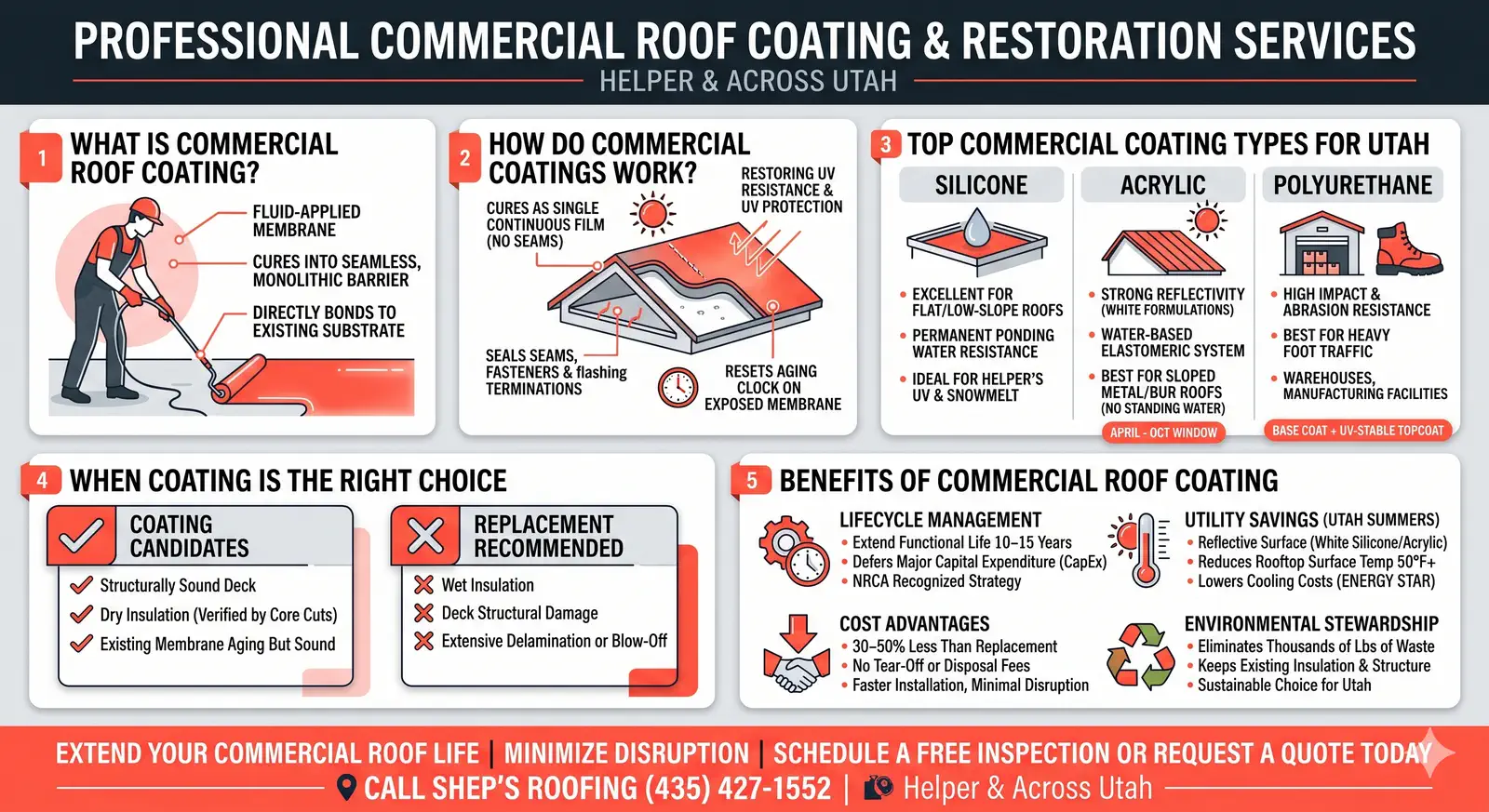
A roof coating is a fluid-applied membrane that is rolled, sprayed, or brushed onto an existing roof surface in multiple passes. Once cured, the coating forms a continuous, seamless, monolithic barrier that bonds directly to the substrate below, sealing seams, fastener heads, flashing terminations, and minor surface defects that would otherwise allow water entry.

Unlike a new membrane installation that sits on top of insulation with mechanically fastened or adhered attachment, a coating system integrates with the existing roof surface. It does not add significant weight to the structure, does not require removal of the existing system, and creates no seams, because it cures as a single continuous film across the entire roof area. That seamless quality is one of the primary performance advantages of coating over patch-and-repair approaches that address individual leak points but leave the rest of the aging membrane exposed.

The coating also provides a fresh UV-resistant and reflective surface layer. In Helper and across Utah, where high-altitude UV exposure accelerates the degradation of polymer-based roofing membranes, restoring that UV barrier through coating application can effectively reset the aging clock on an existing roof that still has structural integrity but has lost its surface protection.

Types of Commercial Roof Coatings We Apply in Utah

Not all roof coatings are interchangeable. The right coating chemistry depends on the existing roof substrate, the slope and drainage conditions present on the building, the climate exposure, and the performance objectives of the building owner. Shep’s Roofing evaluates each project individually and specifies the coating system that matches the building’s actual conditions, not a one-size-fits-all product.

Silicone Roof Coatings

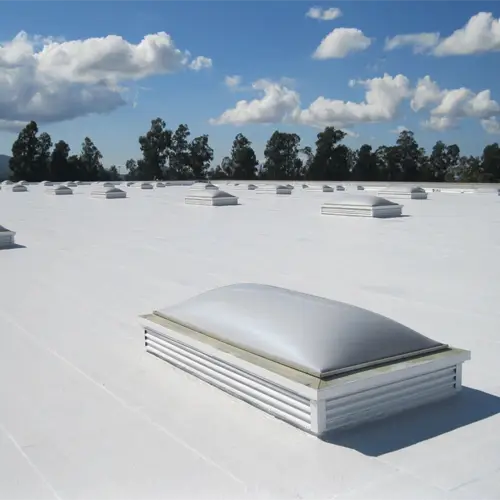
Silicone is the most versatile and weather-resistant coating chemistry available for commercial roofs. Its standout characteristic is permanent resistance to ponding water, silicone does not absorb moisture, does not soften when wet, and does not break down in standing water conditions. This makes silicone the preferred coating for flat and low-slope commercial roof systems where drainage is slow or imperfect and ponding occurs after rain or snowmelt events.

Silicone coatings also deliver excellent UV resistance, which matters significantly in Utah’s high-elevation environment. The coating maintains its reflective properties and elasticity over time without the chalking and embrittlement that affect some acrylic formulations under sustained UV exposure. For buildings in Helper and Carbon County, where elevation amplifies UV intensity and clear-sky conditions are frequent, silicone provides the most durable long-term surface protection.

Silicone coatings are typically applied at 20 to 30 mils dry film thickness in two passes and can be applied over TPO, EPDM, metal, modified bitumen, BUR, and SPF substrates with appropriate priming.

Acrylic Roof Coatings

Acrylic coatings are water-based elastomeric systems that offer strong reflectivity, good flexibility, and lower material costs compared to silicone. Acrylic performs well on sloped roofs with positive drainage where ponding water is not a concern, the material can soften and re-emulsify when exposed to prolonged standing water, which limits its application on dead-flat surfaces.

For metal roofing panels with surface corrosion, failing sealants, or fading finishes, acrylic coatings provide an effective restoration solution. The coating bridges minor gaps at panel overlaps and fastener penetrations while adding a fresh reflective surface. If your commercial building has a metal roof that is structurally sound but cosmetically degraded, acrylic coating is often the most cost-effective path to renewed performance.

Acrylic coatings require application in temperatures above 50°F and cannot be applied when rain is expected within 24 hours. In Utah’s climate, this limits the effective application season to approximately April through October, a scheduling factor Shep’s Roofing accounts for during project planning.

Polyurethane Roof Coatings

Polyurethane coatings, available in aromatic and aliphatic formulations, provide the highest impact and abrasion resistance of any coating chemistry. Aromatic polyurethane is applied as a base coat for its toughness and adhesion, while aliphatic polyurethane serves as a topcoat for UV stability and color retention.

This two-coat polyurethane system is the best choice for commercial roofs that receive heavy foot traffic from maintenance personnel, rooftop equipment servicing, or regular access for building operations. Warehouses, manufacturing facilities, and buildings with extensive rooftop HVAC systems in the Helper area benefit from polyurethane’s ability to resist scuffing, puncture, and mechanical wear that would damage softer coating systems.

Commercial Roof Coating Types Compared: Silicone vs. Acrylic vs. Polyurethane for Utah Buildings

Choosing the right coating chemistry is the most consequential decision in any commercial roof coating project, the wrong product for your substrate or drainage conditions will fail prematurely regardless of application quality. The table below provides a detailed comparison of every coating system Shep’s Roofing applies across Helper, Carbon County, and throughout Utah.

Coating Type

Base Chemistry

Best Substrate

Ponding Water Tolerance

UV Resistance

Typical Dry Mil Thickness

Application Temperature

Reflectivity

Best Suited For

Utah Climate Rating

Silicone

Silicone polymer

TPO, EPDM, metal, BUR, SPF, mod bit

Excellent — permanent ponding resistance

Excellent — no chalking or embrittlement

20–30 mils (2 coats)

35°F and above

High — white formulations 80%+ SRI

Flat and low-slope roofs with slow drainage

Outstanding — ideal for Helper’s UV intensity and snowmelt ponding

Acrylic

Water-based elastomer

Metal panels, sloped BUR, mod bit

Poor — re-emulsifies in standing water

Very Good — UV stable with pigment

15–25 mils (2 coats)

50°F and above

Excellent — highest reflectivity available

Sloped metal roofs with positive drainage

Very Good — April through October application window in Utah

Aromatic Polyurethane

Polyurethane (base coat)

Any commercial substrate

Good

Poor — requires aliphatic topcoat

15–20 mils base coat

40°F and above

Low as base coat

High-traffic roofs as base layer under aliphatic topcoat

Good — requires topcoat for UV performance

Aliphatic Polyurethane

Polyurethane (topcoat)

Over aromatic polyurethane base

Good

Excellent — superior color retention

5–10 mils topcoat

40°F and above

Moderate to High

High-traffic commercial roofs — warehouses, manufacturing

Very Good — UV stable in Utah’s high-altitude sun

Elastomeric (general)

Acrylic or rubber-based

Most commercial substrates

Moderate

Good

20–30 mils

50°F and above

High — white formulations

General commercial restoration

Good — versatile across Utah climate zones

Aluminum Fibered

Asphalt aluminum

BUR, mod bit, metal

Moderate

Good — reflects IR radiation

15–20 mils

40°F and above

Moderate — reflects heat not light

Older BUR and mod bit systems

Good for thermal performance in Carbon County winters

When Commercial Roof Coating Is the Right Choice and When It Is Not

Commercial roof coating is a powerful restoration tool, but it is not appropriate for every roof. Being honest about when coating works and when it does not is part of the assessment process Shep’s Roofing performs before recommending any solution.

Good Candidates for Coating

Coating restoration works best when the existing roof system meets several conditions. The structural deck must be sound with no sagging, deflection, or deterioration. The insulation must be dry, if moisture has saturated the insulation boards, coating the surface above them will trap that moisture and accelerate deck corrosion or structural degradation. The existing membrane or surface must be intact enough to serve as a substrate for the coating to bond to, even if it has localized damage, weathering, or minor seam issues that can be repaired before coating.

Typical coating candidates include aging TPO roofing systems with UV-worn surfaces but sound seams, metal roofs with surface rust and failing fastener seals, modified bitumen roofs approaching the end of their initial service life, and BUR systems with gravel loss and surface cracking.

When Replacement Is the Better Option

If the insulation is wet, the deck has structural damage, the membrane has extensive blow-off or delamination, or the existing system has already been coated multiple times and reached its maximum serviceable thickness, coating is not the right answer. In these cases, a full roof replacement that addresses the underlying conditions is the appropriate investment. Shep’s Roofing performs core cuts and moisture surveys during our inspection process specifically to make this determination, we do not guess, and we do not recommend coating over a compromised substrate just to close a lower-cost sale.

Why Choose Shep’s Roofing

  • Proper Surface Preparation Before Every Application — A coating is only as durable as the surface beneath it. We pressure wash, repair all seams and penetrations, and apply primer where required before a single drop of coating goes down. Skipping this step is the most common reason commercial roof coatings fail prematurely.
  • Right Product for Every Roof Type — Silicone, acrylic, elastomeric, and polyurethane coatings each perform differently on different substrates. We match the coating system to your specific roof membrane, drainage pattern, and climate exposure rather than applying the same product to every job.
  • Utah Climate Expertise — From Carbon County’s freeze-thaw cycling and heavy snow loads to the intense UV and heat of southern Utah markets, we specify coating systems that perform across the full range of conditions Utah commercial roofs face year-round.
  • Coating as a Cost Alternative to Full Replacement — When a commercial roof still has structural integrity, a properly applied coating system can add 10 to 20 years of service life at a fraction of the cost of tear-off and replacement. We give you an honest assessment of whether coating is viable for your building before recommending any course of action.
  • Energy Efficiency Benefits — Reflective coating systems that meet ENERGY STAR and Cool Roof Rating Council standards reduce rooftop surface temperatures significantly, lowering HVAC loads and energy costs for the commercial building below.
  • Detailed Written Scope and Warranty Documentation — Every commercial coating project includes a written scope of work, product data sheets, application records, and warranty documentation for your building files and insurance records.

Our Commercial Roof Coating Process for Utah Properties

Every Shep’s Roofing coating project follows a structured process designed to ensure proper adhesion, consistent film thickness, and long-term performance.

Inspection and Substrate Evaluation

The process begins with a comprehensive roof inspection that goes beyond a visual surface check. We evaluate membrane condition, seam integrity, flashing details, drainage performance, and, critically, insulation moisture content through core sampling. This inspection determines whether coating is viable and which coating chemistry is the right match for the substrate and conditions present.

Surface Preparation

Surface preparation is the single most important factor in coating adhesion and long-term performance. A coating applied over a dirty, loose, or contaminated surface will fail regardless of how premium the coating material is. Our crews power-wash the entire roof surface to remove dirt, debris, biological growth, and oxidation. Loose or failing areas of existing membrane are cut out and repaired. Seams are re-sealed where needed. Penetration flashings and edge details are addressed before any coating material touches the roof.

Primer and Coating Application

Primer is applied where required by the coating manufacturer based on substrate type. The coating is then applied in multiple passes, typically two coats at specified wet-mil thickness, using airless spray equipment or roller application depending on the coating system and project conditions. Each pass must cure before the next is applied, and our crews verify wet and dry film thickness throughout the application to ensure the manufacturer’s minimum coverage specifications are met at every point on the roof.

Final Inspection and Documentation

After curing, we conduct a final inspection to verify film thickness, adhesion, and complete coverage at all details. The building owner receives documentation including the coating manufacturer, product specification, mil thickness readings, warranty registration, and a recommended maintenance schedule.

Cost Advantages of Coating vs. Full Replacement

The financial case for roof coating restoration is compelling when the existing roof qualifies. Coating a commercial roof typically costs 30 to 50 percent less than a full tear-off and replacement for the same building footprint. The savings come from multiple factors: no tear-off labor or disposal fees, no new insulation purchase (assuming existing insulation is dry and adequate), reduced material volume, and faster installation that minimizes business disruption.

For Utah building owners managing capital budgets and reserve funds, coating also offers a strategic timing advantage. A coating application that extends an existing roof’s life by 10 to 15 years allows the building owner to defer the major capital expenditure of full replacement, potentially aligning that cost with a future budget cycle, refinancing event, or building sale timeline.

The National Roofing Contractors Association recognizes roof coating and restoration as a legitimate lifecycle management strategy that responsible building owners use to maximize the return on their original roofing investment. For properties where the existing system is aging but structurally viable, coating often represents the most financially sound decision.

Testimonials

What They’re Saying About Us

***REVIEWS GO HERE***

Energy Efficiency and Sustainability Benefits

Commercial roof coatings, particularly white silicone and acrylic formulations, deliver measurable energy performance improvements. A reflective roof coating can reduce rooftop surface temperatures by 50°F or more compared to a dark or weathered surface, which directly reduces the heat transferred into the building and the cooling energy required to maintain interior comfort.

In Helper and across Utah, where summer afternoon temperatures regularly push into the 90s and 100s and elevation intensifies solar radiation, that temperature reduction translates into real utility savings. The U.S. Environmental Protection Agency’s ENERGY STAR program lists reflective roof coatings among its qualified roof products, recognizing their contribution to commercial building energy efficiency.

Coating restoration also carries a sustainability advantage that matters to environmentally conscious building owners and tenants. By restoring the existing roof in place rather than tearing it off and sending it to a landfill, coating eliminates thousands of pounds of roofing waste per project. In a state where landfill capacity and environmental stewardship are growing public concerns, this is a tangible benefit beyond the balance sheet.

Proudly Serving Utah With Expert Commercial Roof Coating Services

From small retail buildings and warehouses to churches, schools, and large commercial properties, Shep’s Roofing delivers professional commercial roof coating services from our home base in Helper, UT, extending across Carbon County and throughout the entire state. Our service areas include Helper, Salt Lake City, Provo, West Valley City, West Jordan, St. George, Lehi, Orem, Sandy, Eagle Mountain, Herriman, and Saratoga Springs. Explore our complete list of coverage zones on our Service Areas page. 

Whether you are looking to seal an active leak, restore a deteriorating flat roof membrane, reduce cooling costs with a reflective coating system, or add years of service life to an aging commercial roof without the cost of full replacement, our licensed crew brings the right materials, the right preparation, and the right application expertise to every commercial coating project we take on.

Schedule a Commercial Roof Coating Assessment in Helper and Across Utah

If your commercial roof is aging, showing signs of surface wear, or developing recurring leak points, a professional coating assessment can determine whether restoration is a viable option, and how much it could save you compared to full replacement. Shep’s Roofing evaluates every building honestly, recommends coating only when it makes sense, and applies coating systems to manufacturer specifications for warranted performance.

Call (435) 427-1552 or visit our contact page to schedule your free roof estimate.

Frequently Asked Questions

How long does a commercial roof coating last in Utah?

A professionally applied commercial roof coating system typically provides 10 to 15 years of additional service life when applied to a qualifying substrate. Silicone coatings tend to deliver the longest performance in Utah’s climate due to their UV resistance and moisture tolerance. Recoating is possible at the end of the initial coating cycle, potentially extending service life further without ever requiring a full tear-off.

Active leaks must be identified and repaired before coating application. A coating system is designed to seal and protect an existing roof, it is not a substitute for targeted roof repairs at specific failure points. Our roof leak detection services pinpoint leak sources so they can be properly repaired before coating restores the full roof surface.

Silicone, acrylic, and polyurethane coatings can be applied over most commercial roofing substrates including TPO, EPDM, PVC, metal panels, modified bitumen, built-up roofing, and spray foam. The substrate condition, not just the type, determines whether coating is viable, which is why a professional inspection is always the first step.

Roof coating is a restoration strategy that extends service life, not a permanent replacement. The coating will eventually weather and require recoating or, at some point, the underlying structure will reach the end of its serviceable life and require full roof replacement. The value of coating is that it defers that major expense while maintaining waterproofing performance in the interim, often for a decade or more.

The application window depends on the coating chemistry. Silicone coatings can be applied in a wider range of temperatures, while acrylic coatings require ambient temperatures above 50°F and dry conditions for at least 24 hours after application. For most Utah projects, the optimal application season runs from mid-April through mid-October. Shep’s Roofing schedules coating projects within this window to ensure proper curing and adhesion.

Coating applications can either extend or void an existing warranty depending on the manufacturer’s requirements. Some manufacturers offer warranty extensions for approved coating systems applied by certified contractors. Others may void coverage if non-approved products are applied. Shep’s Roofing reviews your existing warranty documentation before recommending any coating system to ensure compatibility and avoid unintended coverage gaps.

Get in Touch with Us

Shep’s Roofing

435 N Main St, Helper, UT 84526

(435) 472-1552

Monday: 8AM – 8PM
Tuesday: 8AM – 8PM
Wednesday: 8AM – 8PM
Thursday: 8AM – 8PM
Friday: 8AM – 8PM
Saturday: 8AM – 8PM
Sunday: Closed

***MAP GOES HERE***

Quality roofing provider

Connect With Us

Shep’s Roofing
435 N Main St, Helper, UT 84526
(435) 472-1552
Mon–Sat: 8 AM – 8 PM